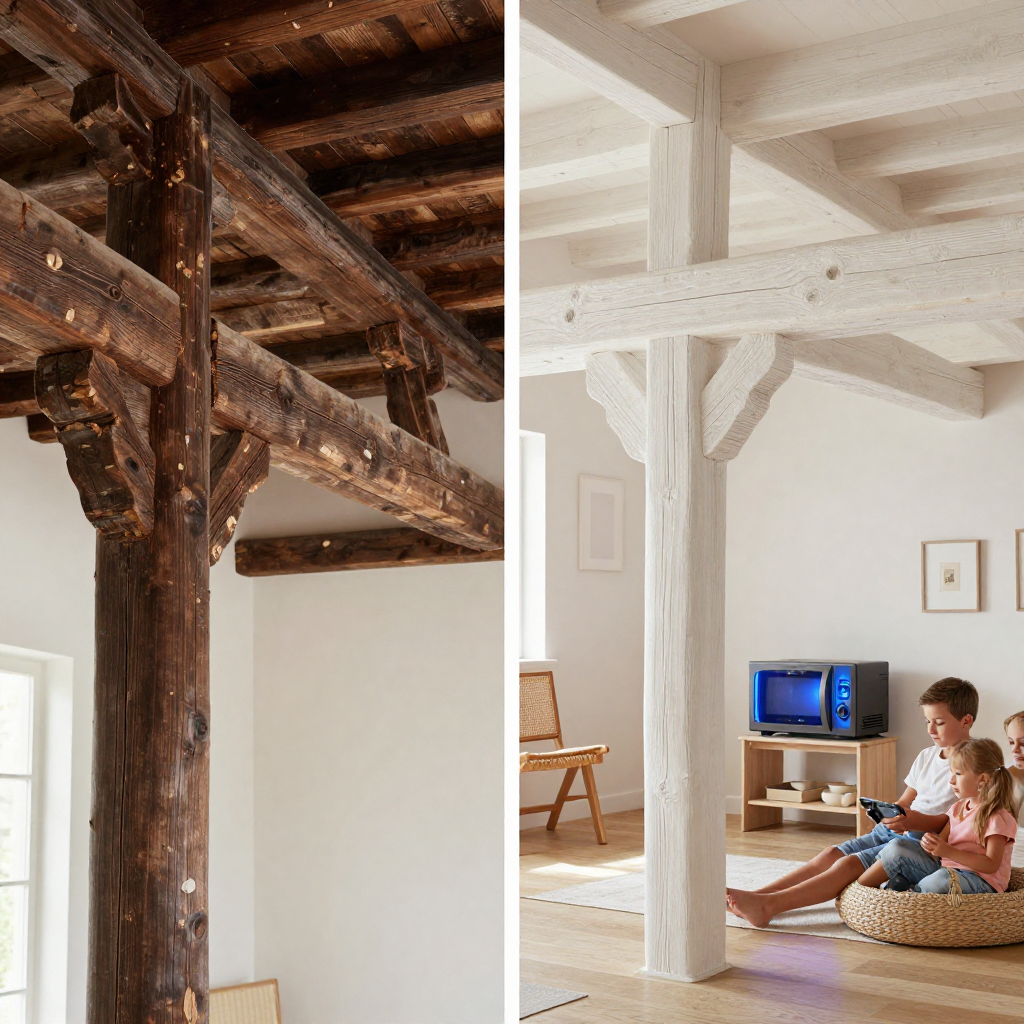
Is Microwave Woodworm Treatment Safe for My Family and Pets?
When homeowners discover a woodworm infestation, one of their first concerns is often the safety of the treatment itself. If children, pets, or other family members live in the home, it’s natural to ask whether the chosen method could pose unnecessary risks.
Traditional woodworm treatments have often relied on chemical insecticides or fumigation, leading many people to worry about chemical exposure inside their homes. Modern microwave technology offers a different approach. Instead of using pesticides, Shashel uses carefully controlled non-ionizing microwave energy to target active wood-boring insects hidden inside timber.
Understanding how this technology works can help homeowners make informed decisions about protecting both their property and their family.
Why Safety Is an Important Consideration
Every pest control treatment should balance two priorities:
- Effectively eliminating the infestation
- Protecting people, pets, and the surrounding property
Before selecting any treatment method, homeowners should understand how it works, what precautions are required, and how it fits their particular situation.
How Microwave Woodworm Treatment Works
Microwave treatment is based on established principles of physics rather than chemical toxicity.
Shashel systems generate carefully controlled non-ionizing microwave energy. As this energy passes through timber, insects hidden inside the wood absorb it more efficiently than dry, seasoned timber because they contain much more moisture.
Their internal temperature rises until they can no longer survive.
This process can eliminate:
- Eggs
- Larvae
- Pupae
- Adult beetles present within the treated area
The treatment focuses on the infestation inside the timber instead of applying pesticides to the wood.
What Does “Non-Ionizing” Mean?
The word “radiation” often sounds alarming, but not all forms of radiation are the same.
Microwave woodworm treatment uses non-ionizing radiation, which is different from ionizing radiation such as X-rays or gamma rays.
Non-ionizing microwave energy:
- Does not make wood radioactive.
- Does not involve radioactive materials.
- Is used to generate controlled heat within the treatment area.
- Is applied only during the treatment process.
Understanding this distinction helps explain why microwave technology is considered fundamentally different from technologies that use ionizing radiation.
No Chemical Pesticides
One reason many homeowners consider microwave treatment is that it does not rely on conventional chemical insecticides.
This means there are:
- No pesticide sprays on the treated timber
- No toxic fumigation gases
- No chemical residues left on the wood after treatment
- No need to coat affected timber with insecticides as part of the microwave process
For families seeking a chemical-free option for active woodworm infestations, this can be an important advantage.
What About Children and Pets?
Children and pets are naturally curious, making safety planning especially important during any maintenance work in the home.
Professional microwave treatment should always be carried out according to the manufacturer’s instructions and established safety procedures. During treatment, operators control access to the work area and follow appropriate precautions for the equipment being used.
Once the treatment has been completed and the work area has been cleared for normal use by the technician, there are no chemical residues from the microwave process left on the treated timber.
Why Professional Operation Matters
Microwave woodworm treatment is specialized equipment designed for trained users.
Before treatment begins, professionals assess factors such as:
- The location of the infestation
- Timber size and condition
- Moisture content
- Building construction
- Accessibility
- Treatment objectives
Careful planning helps ensure that the equipment is used correctly and that the treatment is carried out safely and effectively.
Suitable for Occupied Buildings
Microwave treatment can be used in many types of occupied properties, including:
- Family homes
- Apartments
- Hotels
- Schools
- Offices
- Historic buildings
- Museums
- Commercial properties
The suitability of treatment for any specific building depends on the condition of the structure and a professional assessment of the project.
Protecting Valuable Timber
Safety is not only about protecting people—it also includes protecting the building itself.
Because Shashel targets active insects inside the timber rather than relying on surface-applied chemicals, it supports the preservation of valuable wooden components such as:
- Roof beams
- Floor joists
- Timber framing
- Decorative ceilings
- Staircases
- Antique furniture
This makes microwave technology particularly attractive for historic and heritage buildings where preserving original materials is a priority.
Comparing Microwave Treatment with Chemical Methods
Every treatment method has its own advantages and limitations.
Microwave treatment differs from conventional chemical approaches in several ways.
Microwave Treatment
- Uses controlled non-ionizing microwave energy
- Chemical-free process
- No pesticide residues
- Targets active insects within the wood
Traditional Chemical Treatments
- May involve insecticides or wood preservatives
- Can leave chemical residues depending on the product used
- May require repeated applications in some situations
The most appropriate option depends on factors such as the type of infestation, the condition of the timber, and the recommendations of the professional carrying out the work.
Tips for Homeowners
If you are considering microwave woodworm treatment, ask questions before the work begins.
Helpful topics include:
- How the treatment will be carried out
- Which areas of the property will be treated
- What temporary precautions are recommended during treatment
- When treated areas can be used normally again
- Any post-treatment care or inspections that may be appropriate
Clear communication helps homeowners understand the process and what to expect.
Looking Toward Safer Wood Preservation
As technology advances, the wood preservation industry continues to develop solutions that reduce reliance on conventional pesticides while maintaining effective pest control.
Microwave technology reflects this direction by combining:
- Established scientific principles
- Professional engineering
- Targeted treatment
- Preservation of original timber
- Reduced chemical use
These qualities make it an increasingly popular option for homeowners and restoration professionals alike.
Conclusion
When used according to the manufacturer’s instructions and professional safety procedures, microwave woodworm treatment offers a modern, chemical-free approach to eliminating active wood-boring insects. Instead of relying on pesticides or fumigation, Shashel uses controlled non-ionizing microwave energy to target pests hidden inside timber while avoiding chemical residues on treated wood.
